The province’s drug decriminalization experiment lowered arrests and reduced harm—but it failed a different political test
by Desmond Cole, From The Breach – read the source article here
If the measure of success is whether life became safer and less punitive for people who use drugs, British Columbia’s decriminalization pilot was a clear win. But the B.C. government doesn’t seem to think so.
The three-year pilot project had an immediate impact: police arrested fewer people for possession, seized fewer drugs from those people, and laid fewer criminal charges against them.
But when announcing the project, which decriminalized the possession and public use of small amounts of certain drugs, wouldn’t be renewed last month, B.C. Health Minister Josie Osborne said the pilot “hasn’t delivered the results that we hoped for.”
Making life easier for drug users didn’t suit the government and the many critics of decriminalization. It was time to make life hard again.
Under questioning from reporters, Osborne seemed to contradict herself. She acknowledged that “the rate of possession offenses, the seizures of drugs, did go down especially in that initial first part of the decriminalization pilot.”
But the minister couldn’t quite explain where the pilot fell short. She did say the goal of the project was “to make it easier for people who struggle with addiction to come forward and seek help.” When reporters asked how the pilot project influenced rates of treatment, Osborne said it was almost impossible to tell.
Referrals to treatment and rehabilitation programs, while important, are not the goal of decriminalization. The goal is to put fewer people in contact with police and courts. That means fewer people who lose their jobs and housing due to arrest, suffer dangerous drug withdrawal in jail, and face assaults and trauma from dealing with cops.
That’s what decrim did. The pilot project led to an immediate drop of 57 per cent in police-reported drug possession incidents in B.C., according to a study of the first year of the pilot in the Journal of the American Medical Association (JAMA).
For those who only support a punitive approach to drug use, fewer drug users being hassled by cops is an abdication of government responsibility. But to those who actually want to end the opioid crisis, it’s progress.
Many experts agree that criminalizing people who use drugs is harmful and pointless. People losing their jobs, housing, and sense of safety by being arrested, fined, and carrying around a criminal record only makes their lives more unstable, and makes them more likely to use drugs in a way that might kill them down the line.
Grand Chief Stewart Phillip, the president of the Union of B.C. Indian Chiefs, said the restoration of police powers “will only deepen trauma, reinforce systemic racism in policing, and widen the disproportionate gaps in health and justice outcomes for First Nations.” Despite the fact that First Nations people in B.C. were seven times more likely to die from a drug overdose than other groups in 2024, many First Nations groups say the government never consulted them before ending the pilot project.
Perhaps this is what Osborne was disappointed about: the JAMA study found that there wasn’t a significant decrease in drug deaths, trafficking, or hospitalizations in the first year of B.C.’s decrim pilot.
The study’s authors noted that “Although decriminalization can reduce the harms associated with criminal legal involvement for individuals who use drugs, the findings do not support decriminalization in isolation as an effective policy at reducing drug overdose harms.”
So decriminalization alone didn’t stop people dying in B.C. (at least not immediately—the study says its findings “may not capture longer-term effects”). But the study is clear: decriminalization needs to work in tandem with other policies, which the government didn’t implement.
Any plan must include targeted investments in housing, safer supply, and improved access to treatment (not simply expanded access to a hotline, as the government unveiled last month when it ended the pilot project). The removal of criminal penalties for possession needs to be federal law rather than a provincial exemption, and needs to apply everywhere to everyone. Portugal, for example, has used decrim policies, in partnership with other health interventions, to dramatically reduce rates of HIV infection and opioid overdose deaths.
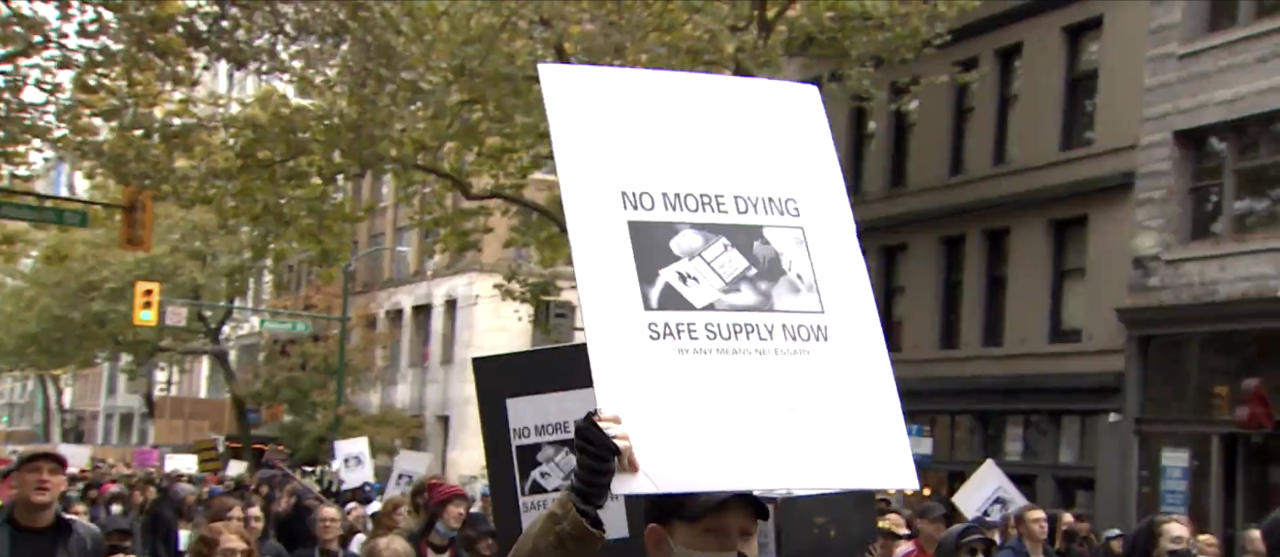
Choosing to look at decriminalization in isolation, deeming the pilot a failure, and rolling it back isn’t progress—it gets us further away from good policies that work together to stop the toxic drug crisis.
When the Trudeau Liberals legalized weed back in 2018, it showed that crime is in the eye of the beholder. As a result, across Canada the number of criminal charges for drug possession have declined in 12 of the last 13 years. It’s something most people would say is good, because they can see how ridiculous it is to entangle someone in expensive, destabilizing, and scarring involvement in the criminal justice system over a gram of weed. But for people who use opioids and other hard drugs, governments hold a different standard, caving to a moral panic that paints these drug users as uniquely dangerous.
If the end of the pilot project is a victory for critics of decriminalization, it’s a hollow one. Recriminalization will break up families, traumatize drug users, and fill jails.
The war on people who use drugs is and always has been a surrender of sorts, a cynical bid to personalize a social problem instead of addressing it with the communal care and public services it requires.
The B.C. government knows very well that life was easier without police beatings, court dates, and eviction notices. It simply refuses to grant that basic dignity to people who use drugs.
Leave a Reply
You must be logged in to post a comment.